Modular construction is usually discussed in the context of large developments, but size isn’t what makes it useful. In smaller office buildings, where disruption is harder to avoid and decisions carry more weight, the way a building comes together becomes part of the design brief.
Modular construction has started to appeal to smaller office projects for that reason, because it offers a more controlled way to build when there's little room for inefficiency.
Why small office projects are different
Small office buildings sit a lot closer to daily operations. There’s usually no spare site, no overflow space, and little appetite for drawn-out construction activities. However, teams still need somewhere to work, and clients still need access. Decisions made during the build have immediate consequences for smaller projects.
Traditional construction separates the design phase and delivery more clearly. Plans are drawn up, then the building process unfolds on site, adjusting as conditions change. At a smaller scale, those adjustments can be disruptive and affect budgets.
Modular construction changes that relationship by finishing more of the building work before it reaches the site.
What modular looks like at a smaller scale
A small modular office building doesn’t need to be complex to be effective. Its strength comes from being precise.
Designing at this scale encourages careful thinking about:
how people move through the space
where natural light is most valuable
which areas need separation and which can stay open
Because you can resolve these decisions before manufacturing begins, the finished building will be more deliberate, which is important for a small office during construction work.
Designing with limited space
Small offices don’t have the luxury of redundancy. Every square metre has to earn its place. Small modular office building design means you can take that into account early on in the process.
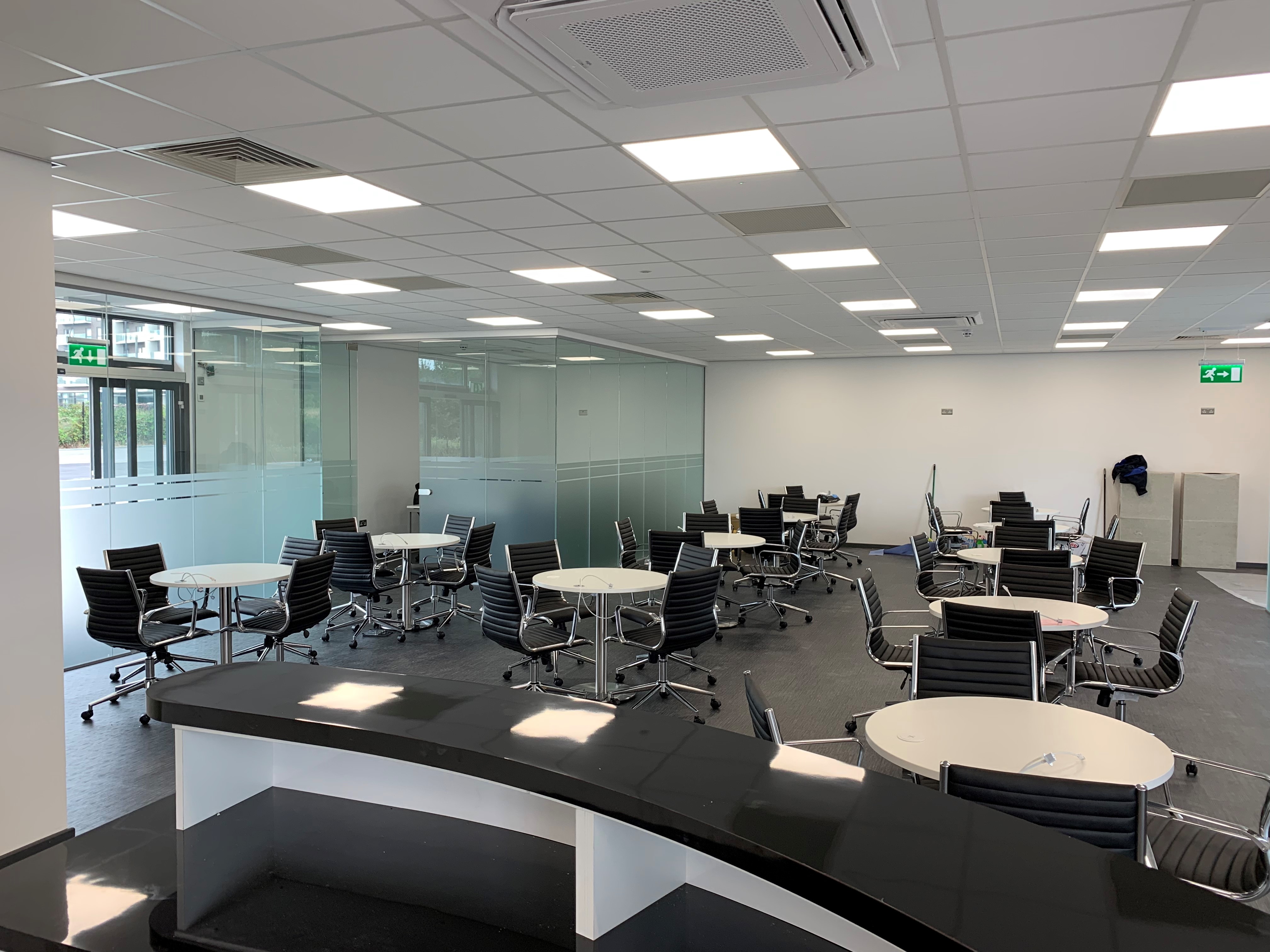
Your design could include storage that is integrated into walls, rather than taking up floor space. Your meeting rooms can also be sized precisely for how they’re used, rather than guessed. These aren’t headline features, but you’ll notice how much easier it is to move around the workspace without frustration.
.jpg)
Containing disruption on active sites
Most small commercial office projects will be happening alongside ongoing work. Closing a site, even temporarily, sometimes isn’t realistic.
Modular construction keeps on-site activity low by moving most of the build elsewhere. Groundworks still take place at your business, but most of the actual construction happens off-site. Your installation period will be shorter, more controlled, and easier to plan around.
For small teams, this makes the difference between a project feeling manageable and becoming a constant distraction.
Cost clarity at a smaller scale
Smaller projects feel cost changes more sharply than large ones. A change or delay that might be absorbed by a big business can affect cash flow or scheduling more noticeably in a small one.
Modular construction reduces some of that risk by tightening up the process. Indoor manufacturing environments reduce most weather disruptions, labour requirements remain more consistent, and programmes are easier to track.
This doesn’t remove cost considerations completely, but it does make them easier to manage. For many businesses, that’s as valuable as the final figure itself.
Planning and compliance considerations
Your modular office buildings will meet all the same building regulations as traditional construction because the planning requirements depend on location, use, and local authority guidance rather than the construction method.
For small office projects, it helps to get that clarity early. Understanding site constraints and regulatory expectations upfront allows the design to progress without friction later.
Working with experienced providers like Paragon Space makes the process much simpler when sites are constrained or timelines are tight.
When modular works
Modular construction suits small office buildings where:
Disruption needs to stay contained and short
Timelines are tight
The site itself offers limited flexibility
The business wants to leave room to adapt later
It won’t suit every brief, but where control and clarity sit high on the priority list, modular construction fits in naturally.
Is modular construction the right choice for you?
For small office buildings, the question isn’t whether modular construction is faster or cheaper in isolation. It’s whether it offers a better balance of control, predictability and adaptability. A small modular office building allows businesses to build deliberately, with fewer unknowns and less disruption.
For organisations exploring small modular office building design, modular construction is worth considering as a practical response to the realities of building at a smaller scale.
Small office buildings from Paragon Space
At Paragon Space, small office projects receive the same level of attention as larger developments. The focus stays on how the building will be used, rather than treating scale as a limitation.
We closely coordinate design, manufacturing, and delivery, so your finished Modular Office Building feels like a permanent part of your business.
If you’re assessing options for a small office project and want a clearer sense of whether modular construction fits your brief, Paragon Space is ready to talk through your plans and help shape the right approach.