In the past, building a new sports facility meant dealing with months of mess, bad weather delaying the work, and costs going through the roof. Today, more and more clubs are choosing modular buildings as a smarter, faster, and more affordable way to build.
At Paragon Space, we’ve helped countless organisations turn their vision into reality. Designing your own facility might seem daunting, but with the right approach, it can be a straightforward and exciting process.
Here is our simple, step-by-step guide to designing your perfect modular sports facility.
Step 1: Figure Out What You Need
Before we start drawing floor plans or picking out paint colours, you need to know exactly what your building has to do. The best part about modular construction is that it’s totally flexible. You can design it to fit your exact needs:
Who will use the building? Think about your home teams, the away teams, and the referees.
What sports are you playing? A rugby club might need extra-large shower areas to wash off thick mud. A tennis club might care more about having a nice, big space with windows to sit and watch the games.
Will it be used for anything else? Does the building need to work as a village hall, an after-school club, or a place to host parties?
How many people need to fit inside? Think about the future, too. It is much easier (and cheaper) to build slightly larger rooms now than to try to fit growing teams into a tiny space five years down the line.
Answering these questions first gives you a clear goal and makes the rest of the design process much easier.
Step 2: Plan Your Layout
The way rooms connect to each other is important. If the layout isn't working, you end up with muddy floors in the cafe, cramped hallways, and grumpy players on match days. When you plan the layout, think about how people will actually walk through the building. A good sports building usually needs these areas:
Muddy Zones vs. Clean Zones: You want to keep muddy boots away from the nice social areas. A smart idea is to have one door that takes players straight into the changing rooms, and a different door for fans going into the clubhouse.
The Changing Rooms: Good modular sports changing rooms need plenty of bench space, safe lockers for bags and phones, and enough empty space for a coach to talk to the team.
Rooms for the Officials: Don't forget the referees and umpires. They might need their own private room to change and shower, separate from the players.
Easy Access for Everyone: Your building needs to welcome everyone. Make sure hallways are wide, there are no awkward steps at the doors, and you have accessible toilets and changing rooms for wheelchair users.
Step 3: Get the Essentials Right (Showers, Heating, and Air)
A sports facility gets a lot of heavy use in short bursts. Thirty players might all try to use the showers at the exact same time after a match. Because of this, the materials inside need to be tough and easy to clean.
Showers and Toilets: You need strong, high-quality shower blocks. Choose floors that won't get slippery when wet, and wall panels that can handle lots of water.
Fresh Air and Heating: Modular changing rooms can get steamy, damp, and smelly very quickly if the air isn't moving. Putting in good fans and reliable heaters keeps the rooms fresh, dry, and warm.
Saving Energy: Modern modular buildings hold their heat very well, which saves you money. You can save even more by using lights that turn on automatically when someone walks in, and smart heating that you can control from your phone.

Step 4: Make It Look Great
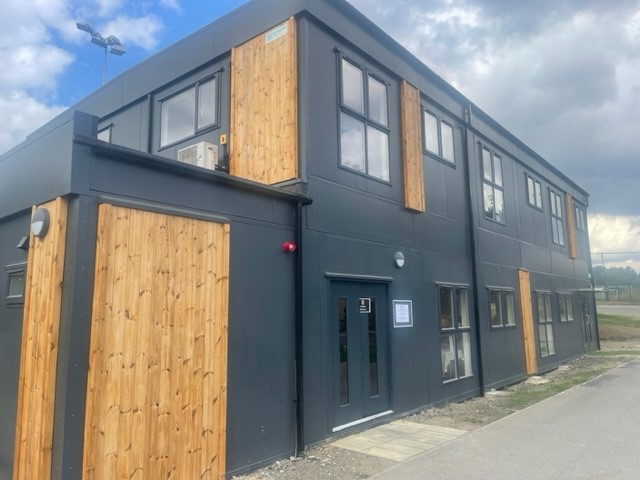
Just because a building is made in a factory doesn't mean it has to look like a grey box. Today’s modular facilities look fantastic and can be designed to match your club's style or blend into the local area.
The Outside: You can choose from lots of different looks, like traditional brick, modern smooth panels, or natural wood. If your club is in a park or surrounded by trees, wooden siding is a great choice because it blends into nature beautifully.
Your Team Colours: The building can be painted or decorated in your club’s colours. It is very easy to add your team badge, sponsor signs, and welcome boards to the design.
Step 5: The Paperwork and Rules
Modular buildings still need planning permission, and they still have to follow building safety rules, but the process is usually much smoother.
When you work with an experienced builder, you don't have to worry about this. A good partner will check that your design meets all the sports guidelines, fire rules, and safety laws before anything is built.
Step 6: Pick the Right Team to Build It
The final step is choosing the right company to build your facility. At Paragon Space, we do everything for you. We don't just build; we work with you from start to finish. We help you draw the plans, we build the facility inside our dry, warm factory, we prepare the ground at your club, and we deliver and install the finished building.
Because we are building in our factory at the same time as we are digging the foundations at your club, the whole project takes a fraction of the time. Your new facility can be ready to use in weeks, rather than months.
Choose Paragon Space for Modular Sports Facilities
Designing a new home for your club or school is a huge moment. By choosing a modular building, you get a high-quality space that fits your exact needs, without destroying your pitches or ruining your season with endless construction.
Ready to upgrade your club? Our team is here to help you design a bespoke space that meets your budget and your deadline. Contact Paragon Space today, and let's get your project moving.